The best brush for an acrylic painting is the one that can place the shape you need. Start with a flat brush for broad areas and a pointed round for lines or smaller shapes. Add a filbert if you want an oval-ended mark. Judge actual head dimensions and how the wet brush holds its shape, rather than buying a large set because it has more brush numbers.
This guide compares brush functions. It does not rank products we have not tested or claim that a particular brand will improve every painter’s work.
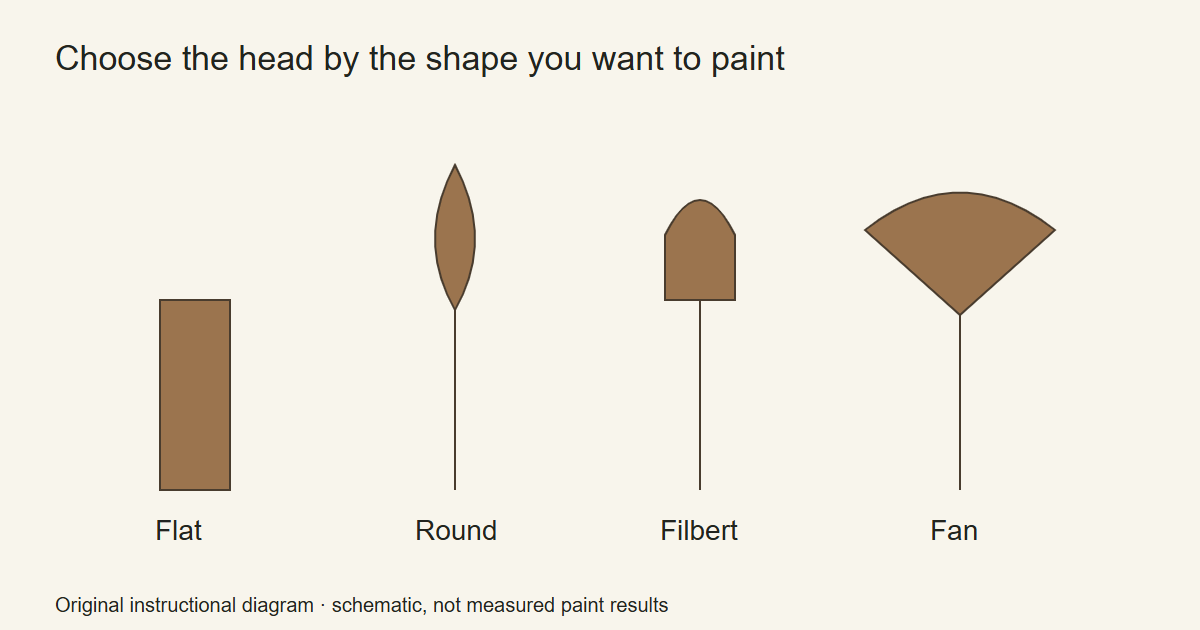
Match the head to the job
Think about the largest shape in your next painting. A sky, a flower petal and a branch ask for different marks. Buying for those tasks is easier than looking for one brush that does everything.
| Brush shape | A useful starting job | Try this mark on scrap |
|---|---|---|
| Flat | Sky bands, blocks of color, straight edges | Paint with the broad face, then turn to the narrow edge |
| Pointed round | Lines, small shapes, controlled details | Begin lightly, press, then lift back to the point |
| Filbert | Rounded contours and petal-like marks | Press a broad stroke and lift to leave the oval end |
| Fan | Broken texture when the technique calls for it | Compare a lightly loaded mark with a fully loaded one |
Canson’s acrylic brush guide connects head shapes with different uses. Winsor & Newton’s filbert description provides a specific example of the oval-tipped head.
Choose a flat and a round first if your next canvas uses those marks. A fan brush can wait until you have a task for it. A filbert is worth considering for the flower painting exercise, but you can simplify that exercise with a brush you already own.
Compare dimensions, not just numbers
A number on the handle is not a universal measurement. Canson notes that manufacturers classify brush widths differently. Two brushes marked with the same number can therefore be a poor size match.
Look for the width and length of the head in the product information. If you are replacing a brush, measure the one you already use and compare its shape as well. A longer head and a shorter head of similar width are still different tools to try.
For a small canvas, hold the dry brush near the largest planned shape before loading it. Can it cover the area in a reasonable pass? Can its edge reach the corner you need? This simple comparison is more concrete than selecting a brush number from someone else’s supply list.
Decide how much spring you need
Compare how two brush heads bend and return when gently flexed. Follow the shop’s handling rules; do not damage a new brush to test it. Once you own it, make the comparison damp on scrap with your paint.
For a thick, visible stroke, try a firmer head. For a softer transition with a more fluid mixture, try a softer one. These are starting choices for an exercise, not a promise that every brush sold as firm or soft behaves identically.
Synthetic brushes are a practical starting point for acrylics. Canson describes them as easy to clean and available in many forms. That does not make every synthetic brush equal, or make natural bristles unsuitable. Look at the brush range’s stated use and make the mark test.
Give each brush a short trial
Use the same paint mixture on the same scrap for both brushes so that you are comparing the tools rather than two different setups.
- Paint a broad patch with the face of the head.
- Turn it to make a narrower line if its shape allows.
- Draw a curved mark and lift the brush away.
- Rinse, reshape and look at the wet head.
- Label the marks with the brush range and dimensions.
Keep the sheet if you are trying several brushes. Note what you prefer: a cleaner corner, a softer end, a longer continuous line or a visible textured stroke. The useful result is a tool choice for your painting, not a score presented as universal quality.
If every brush drags with the same mixture, investigate the paint before buying more tools. Our thinning guide separates paint consistency from a brush’s shape. If the paint flows but the join keeps breaking, use the blending exercise to work on a smaller area.
Keep the brush you like usable
Clean wet paint from the head before putting the brush away. GOLDEN’s materials guidance describes soap-and-water cleaning for acrylic tools. The brush cleaning guide covers the sequence and the difference between fresh paint and hardened residue.
For a paint by numbers project, the useful question is whether the brush can fill the shapes on that canvas. Compare the actual tools in the Artistry By Numbers accessories collection with that job. A larger freehand flat and a small kit detail brush serve different areas; there is no need to make one do the other’s work.
Acrylic Painting Ideas and Artistry By Numbers are owned by OmniLearnConsultingCommerce LLC. Links to Artistry By Numbers lead to our related painting business.
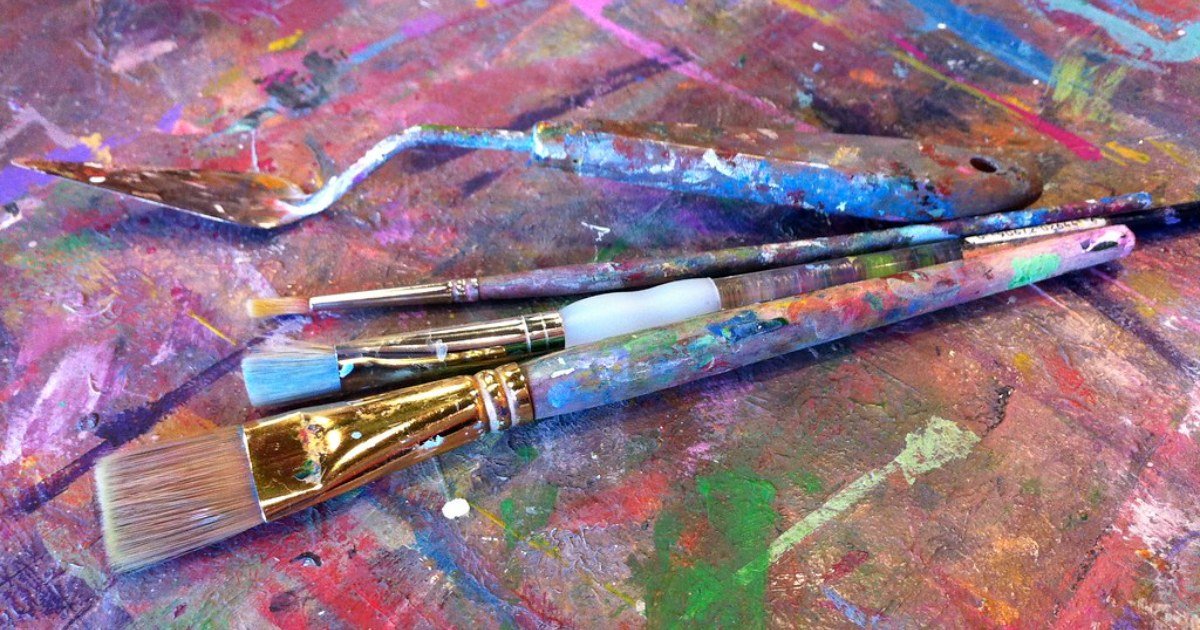
Illustrative image: Art supplies by Average Jane, CC BY 2.0. Cropped and resized. Illustrative art supplies photograph, not a product test or ranked brush selection.